
How Figma uses GitHub
Figma amplifies collaboration through GitHub integration.

About Figma
Figma is a web-based product design platform that streamlines workflows and unifies design tools, bringing features like real-time collaboration, version control, and prototyping to product design. Since its launch in 2016, Figma has grown to serve customers across all sizes, from small startups to large enterprises. Nearly one third of Figma's users are developers, making it essential that the platform addresses their needs alongside designers and product managers.
Customer since: 2016
Location: San Francisco, CA
GitHub Enterprise seats: 560
The Challenge
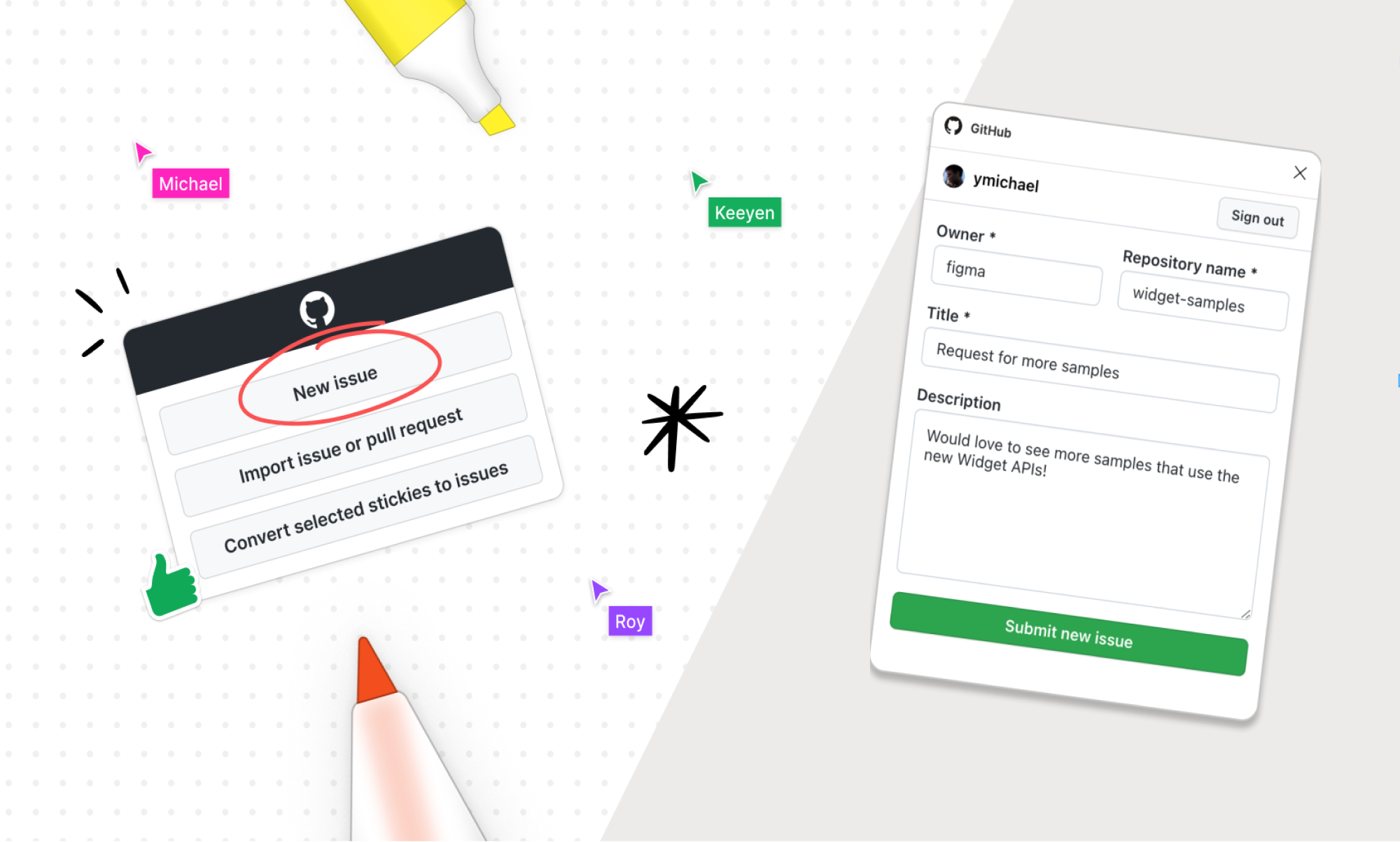
As Figma scaled rapidly—both in customer base and engineering staff—the company faced challenges in maintaining product reliability, development efficiency, and security standards. These pressures intensified as Figma introduced new products like FigJam, a visual collaboration tool for teams to brainstorm, diagram, meet and plan, and even import issues and pull requests with the GitHub widget.
Streamlining Development with GitHub Enterprise

To address these challenges and streamline its DevOps pipeline, Figma standardized its development practices on GitHub Enterprise. GitHub provides a central platform for hosting source code, handling code reviews, and managing pull requests, providing consistency across teams.
"GitHub increases the visibility of code changes and makes it easy for everyone to collaborate on a single pull request as the source of truth," says Engineering Manager for Infrastructure Tommy MacWilliam. Developers now have a single location to review proposed changes, assign groups for review, and collaborate on feature requests.
Promoting Code Reuse Through Innersource
By consolidating its DevOps pipeline on GitHub, Figma embraced innersource principles, further promoting cross-team collaboration and improving code reuse. Figma's infrastructure team focuses on creating reusable components, frameworks, and platforms, accelerating innersourcing across the organization. Building with reusability in mind enables Figma's teams to effortlessly leverage and extend these resources, eliminating the need for individual product teams to constantly reinvent solutions from scratch.
While tech startups often cut corners to accelerate their development lifecycles, Figma maintains craftsmanship as one of its core engineering values. "GitHub helps us build things the right way, enabling us to move faster over the long term," says MacWilliam. The company's commitment to innersource means that the benefits of well-written code compound with each reuse, enhancing the quality and security of the entire codebase.
Maintaining Security at Scale

As Figma grew, maintaining rigorous security standards became increasingly crucial. The company faced emerging concerns such as adjusting static analysis rules to accommodate a wider range of technologies, providing practical security advice to an increasing number of teams, and efficiently managing dependencies for a rapidly expanding code repository.
To tackle these challenges, Figma leverages GitHub's Dependabot, which provides increased visibility into the state of security across the organization. Dependabot generates security alerts and pull requests, which Figma uses to efficiently prioritize and remediate vulnerabilities within its codebase. The company's developers promptly tackle urgent, high-risk issues, while automation handles low-effort fixes, and on-call security engineers triage issues that aren't easily evaluated.
Automating Workflows with GitHub APIs
GitHub's APIs augment Figma's productivity workflows, allowing the team to integrate the capabilities of GitHub Actions with other tools to automate its CI/CD practices effectively. By using GitHub's API to embed CI Results directly within the platform, developers can easily access their pull requests to see all the running tests and any failures without needing to leave the familiar environment.
"GitHub's APIs are core to our productivity workflows. I can't imagine life without them," says MacWilliam.
Supporting Open Source
Figma's commitment to making design more accessible extends beyond its own platform, as the company actively contributes to the open-source community. "One of the best parts of GitHub is ensuring that we're using the same workflows for managing our proprietary code alongside our open source work," says Figma CTO Kris Rasmussen. "This makes it easier for us to contribute back to the projects we use and reduces the friction when open sourcing our own projects."
To address common concerns about accidental code publishing, Figma uses GitHub's robust access controls, ensuring that only authorized individuals can view or modify code, providing an extra layer of security for proprietary and open-source projects alike.
Results
By partnering with GitHub, Figma established consistent development practices, bolstered security measures, and harnessed the power of GitHub's API for seamless automation. "GitHub provides just the right levels of customization and constraints to ensure that we can enforce a great code culture while still enabling us to get code out the door quickly as needed," says Rasmussen. This collaboration facilitated effective teamwork and communication among Figma's diverse teams while maintaining the highest standards of code quality.